F1 Assistant
Domain-aware threads grounded in your codebase and live project state, with the records behind every claim listed underneath it.
Shareable threadsCited answersFeature1 preserves product intent from strategy and PRDs through sprint planning, validation, QA feedback and release communication — with engineering, design and QA working from the same record.
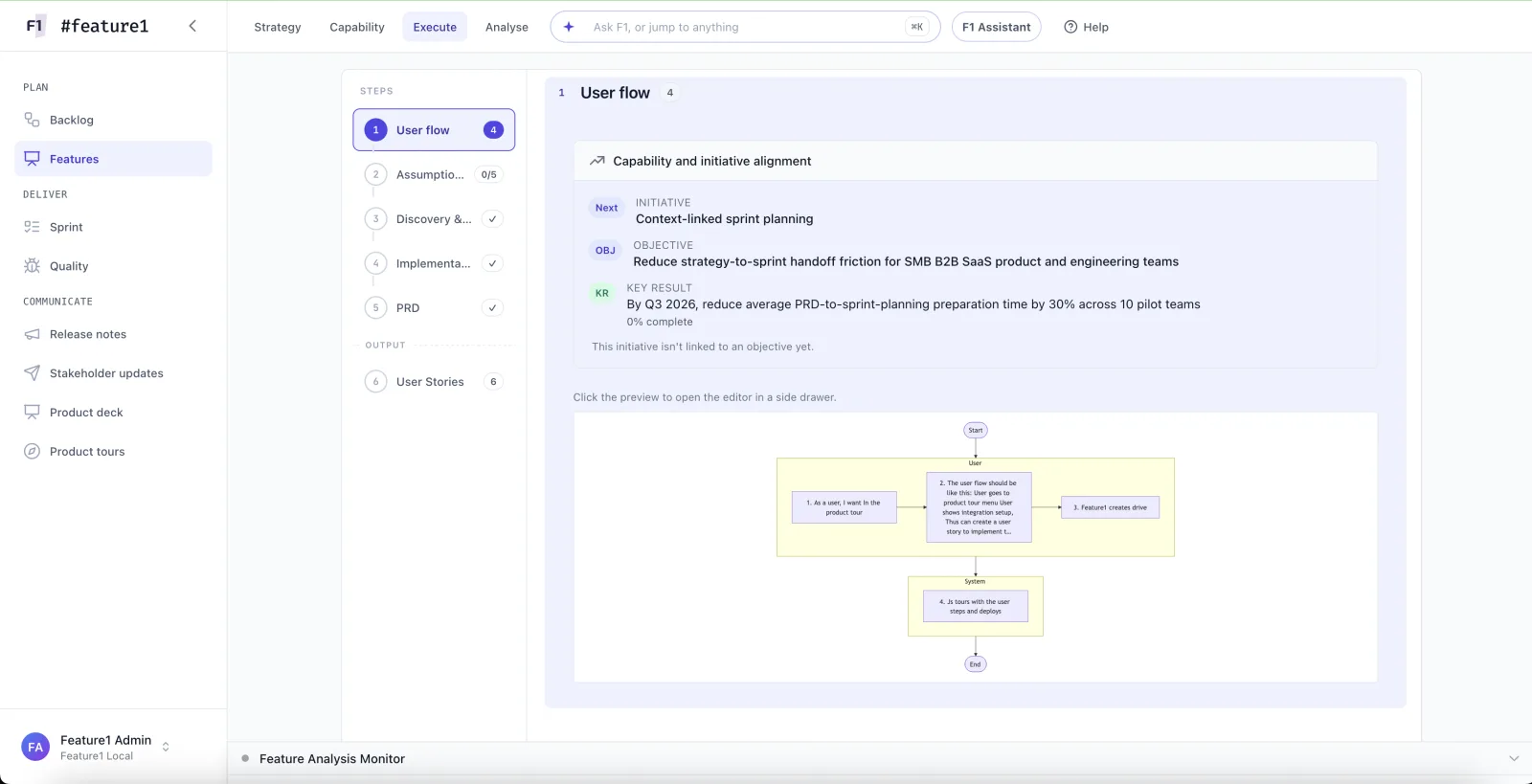
A rough idea goes through six stages before a line of code is written: decomposition, feasibility, impact, implementation study, open questions, and a full PRD. Most tools generate a document. This one argues with you first.
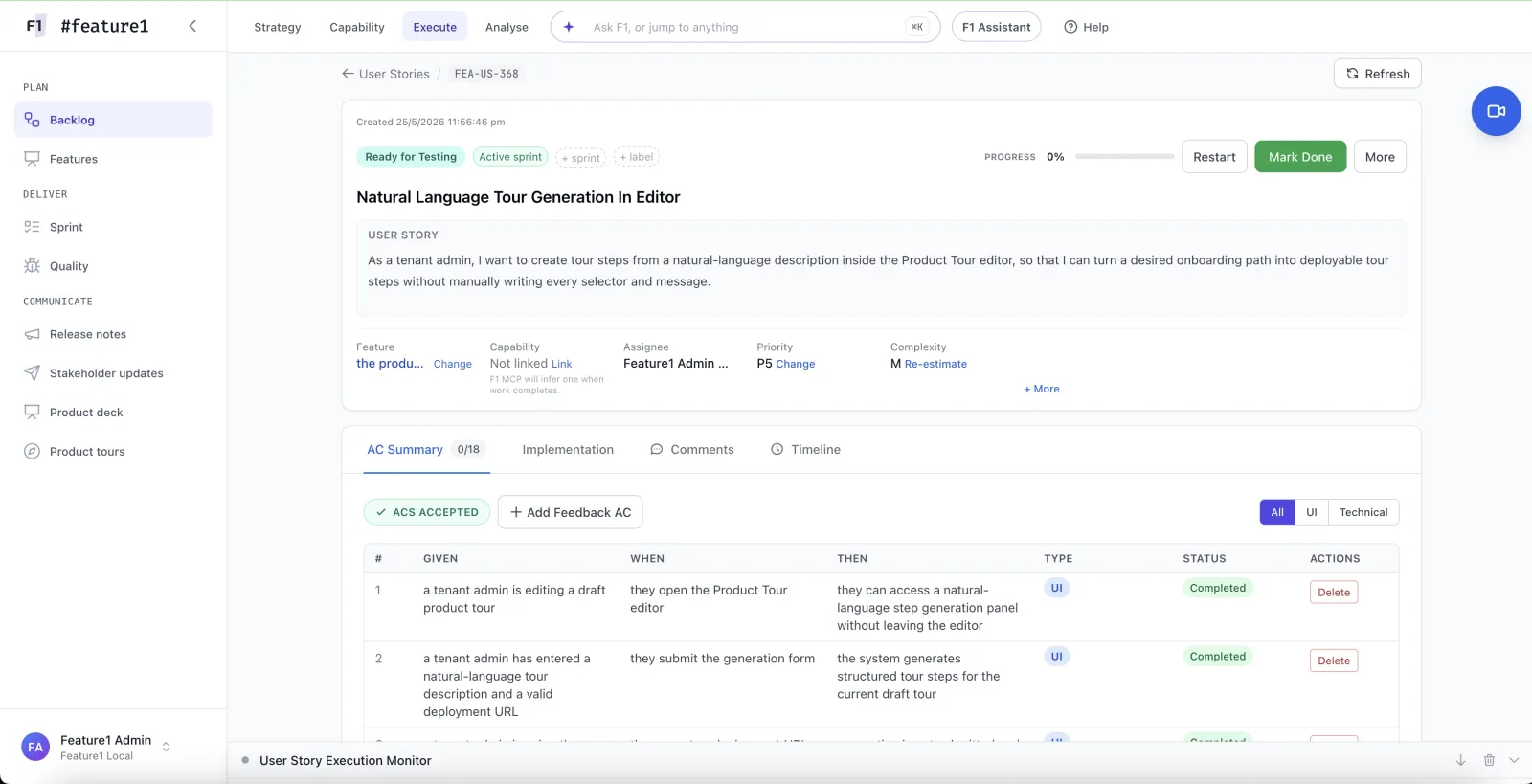
Autopilot works criterion by criterion between human approval gates. Copilot runs driver-navigator through your MCP client. Either way the output traces back to the intent that asked for it, and QA evidence lands before review.
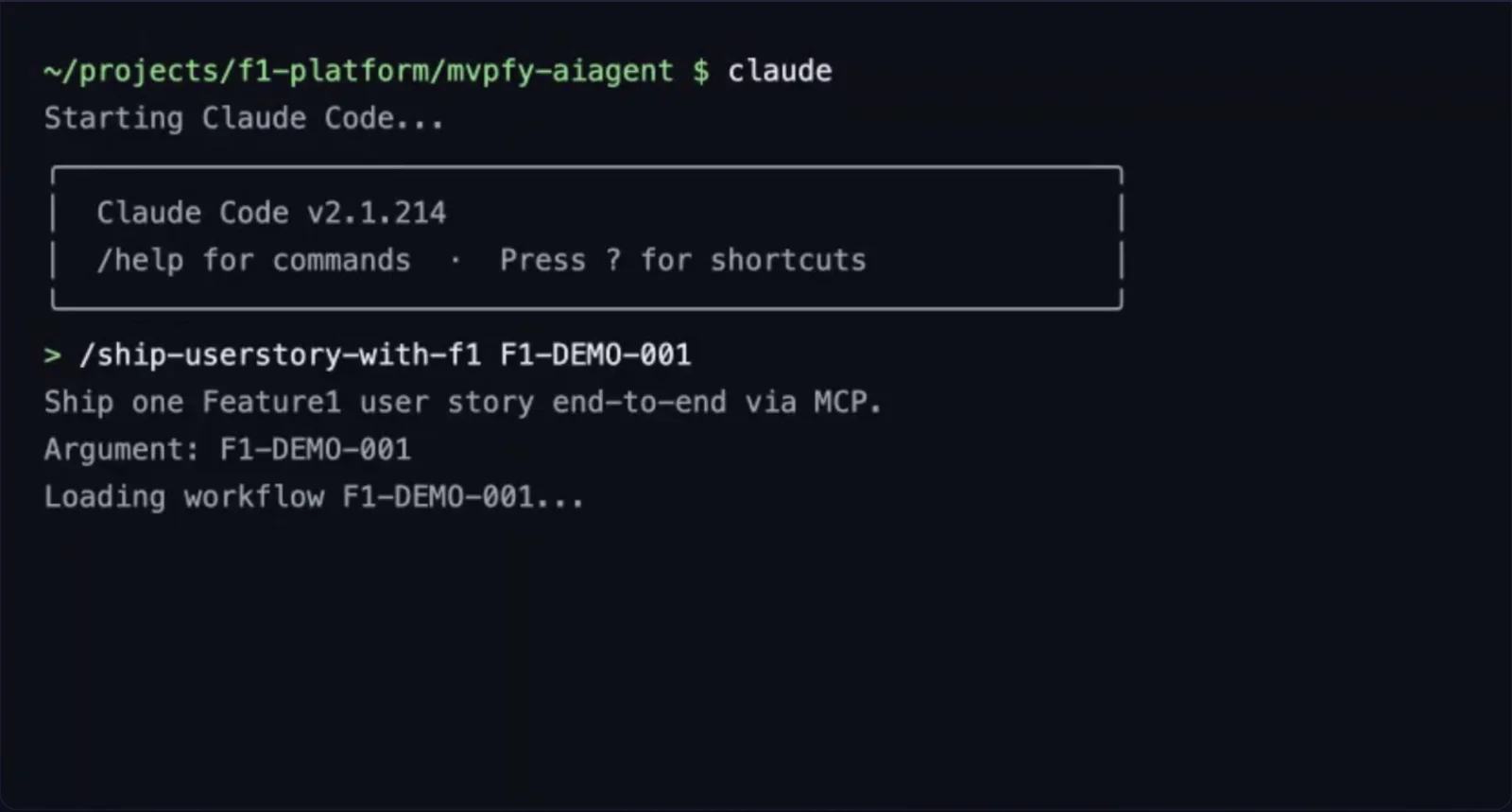
Thirty-plus MCP tools expose features, stories, acceptance criteria, validation and sprint data to any MCP-compatible agent. First-class with Claude Code, agnostic by design. Your agent stops guessing at your backlog.
Domain-aware threads grounded in your codebase and live project state, with the records behind every claim listed underneath it.
Shareable threadsCited answersWell-formed stories and Given / When / Then criteria straight from planned features, each one independently testable.
US-2041AC-001One-click sprints from a prioritised backlog, AI-assisted estimation, velocity and burn-down without leaving the platform.
78 pts18 / 20 doneBranches, commits and pull requests stay linked to the intent, sprint work and QA evidence that drove the change.
GitHubGitLabBitbucketA living knowledge graph of codebase architecture, business context, customer feedback and team conventions.
Knowledge graphRelease notes and stakeholder summaries drafted from completed work, each traceable back to the objective it served.
Objective → PRBring a live objective and a real sprint. If the connection between them is not visible in an afternoon, it is not for you.